
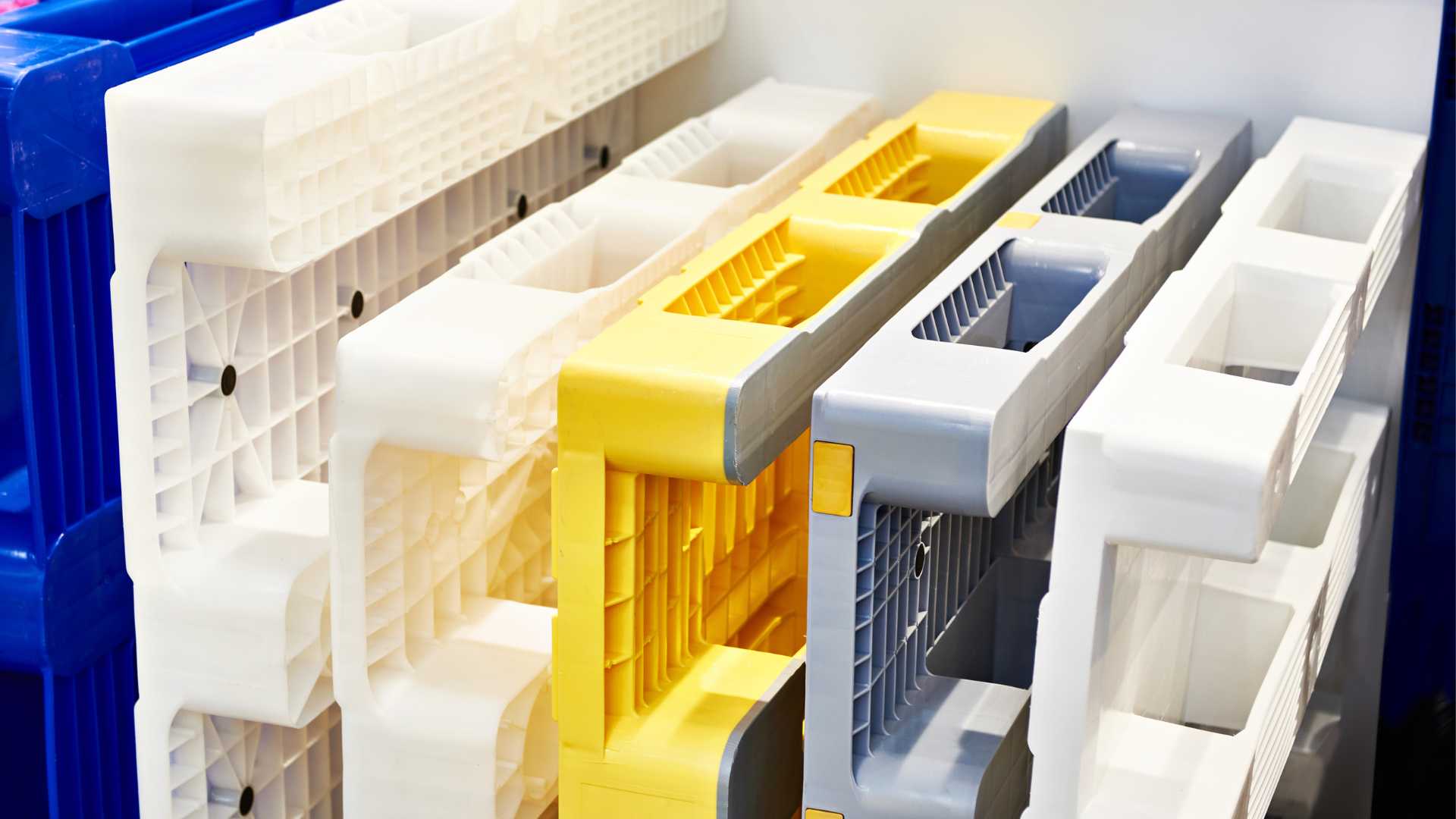
Pallets made of used plastic
Alternative to pallet production
Our goals
- To make pallets out of the used plastic that has flooded our world to a large extent.
- This would not be done using traditional injection moulding techniques: that requires very expensive machinery and the moulding tools cost tens of millions of forints.
Let me quickly introduce myself
I am Szabolcs Takács, CEO of Füzes Raklap Kft. I have been dealing with producing, repairing and selling pallets for 10 years now.
Pallet made of used plastic
5 years ago, I started thinking about making a pallet out of used plastic and came up with the following:
- Today’s technology is most often used to produce plastic pallets by injection moulding. There is another technology, e.g. vacuum forming.
- The disadvantages of this technique are that in order to produce different pallets, you have to change the extruder to a different die – and the cost of these dies can be in the tens of millions of euros.
- Another major drawback is that if it is broken, it cannot be repaired in the same way as the wood pallets.
My theory to this problem
The idea is to create an automatic production line that produces plastic elements that can be assembled using traditional pallet assembly techniques.
The pallets can also be repaired using conventional tools (jigsaws and hand nailers).
What’s the benefit of this process?
- Broken pallets would not end up in the waste container.
- We could reduce used plastic waste on the planet.
Over the past decade, an average of 13 million hectares of forest have disappeared from Earth every year, according to satellite imagery, that’s 2,600 billion m3/year. This includes an estimated 100 million m3/year cut to make pallets and other wood packaging materials.
13 million hectares
2600 billion m³/year
Steps in the production of wooden pallets
Steps in the production of wooden pallets
- Logging
- Driftwood storage
- Transport to the factory
- Driftwood dismantling process
This can be done by bandsaw, timbers and prisming machines.
- Cutting planks and logs from the prism by a slitter
- then chopping the logs
Nailing the pallets
- This can be done by hammer, hand nailer or an automatic machine line.

Heat treatment
Heat treatment, also known as fumigation, is the process of keeping the internal structure of the wood at a temperature of a minimum of 56°C for at least 30 minutes to keep it free of viruses, fungi and other insects.
It is well known that pallets are usually made of wood. What is not commonly known is that wooden pallets provide an excellent breeding ground for fungi and other pathogens during packaging and storage.
This is a problem in itself, but in the food industry it is downright unacceptable! Therefore, a decree has been published that all pallets in international circulation shall comply with.
Pallet production by plastic injection molding
The pallet is made from granulate, which is fed into the injection molding machine.
The European Union planned to allow only plastic pallets to be produced in its member states, but this has not yet been implemented due to the different sizes of pallets. This is the problem we want to solve.
How does this look from the pallet manufacturer’s perspective?
It costs a pallet manufacturing company a lot of money to invest in a plastic pallet production line.
An injection molding machine costs tens of millions of forints. Several types of pertinent tools are needed, because we produce 20-30 pallets of different sizes, for which different types of tools shall be used.
And here comes the point! What’s my viewpoint about all this?
My idea is to make pallets from recycled plastic as follows:
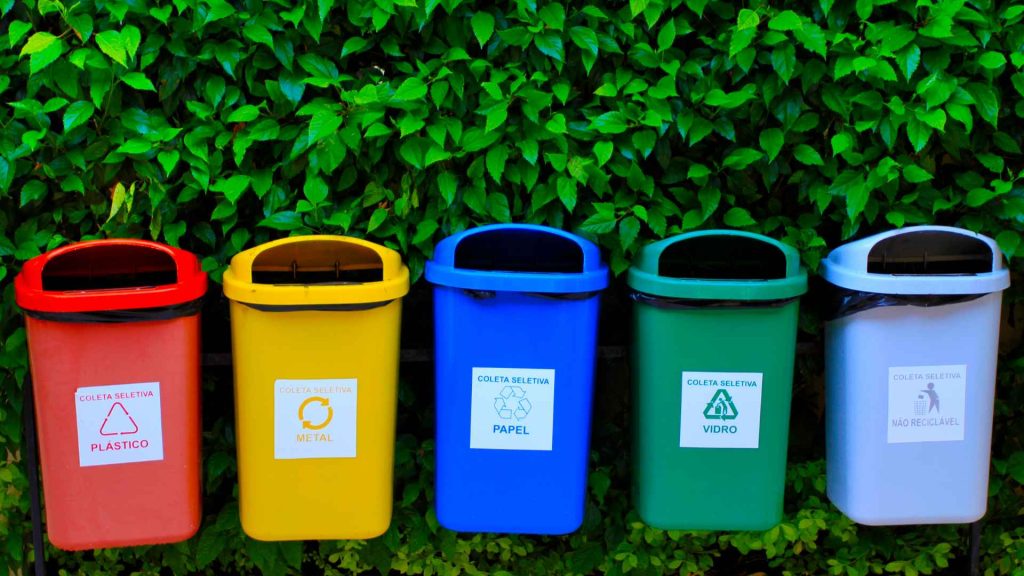
- Separation of household waste: paper, glass, metal, plastic, organic material.
- With the familiar automatic assembly line, consisting of chain conveyors, air classifiers, magnetic belts and vibratory feeders.
- These processes would be carried out in the landfill.
- Sales of other products: paper, metal and plastics that could be sorted by type.
- Less valuable types of plastic could be used to make pallets.
- According to manufacturers, to this day, plastic pallets are made of “scrap” plastic.
- This plastic is mixed with a shredder and filled into an extruder to produce so-called prisms. (It doesn't need to be in granule form, which makes it simpler and more cost effective.)
- We also produce wooden pallets from driftwood that are easy to saw and assemble.
Possible solution: Let’s combine the two
- We use the machines used by pallet manufacturers - i.e. existing slitters, length cutters, dice cutters and nailers.
- We've invested a lot of money in these and we've given them a high profile. We can handle them, assemble them, and we've got the parts supply under control.
- The possible size of the “prism” made from used plastic is: 2500 x 1000 x thickness (100mm,70mm,50mm). Just like an iron plate, it is produced using presses.
- It enters the factory, the same way a driftwood does, making the log splitting process unnecessary, for the finished product is sent straight to the slitter, where it is made into planks or logs. Then, the pallets are nailed and made ready.

Producing a plastic prism
- Sorting municipal waste
- Transporting the plastic mass produced from the extruder
- Placing the plastic mass into the press
- Plastic mass in semi-finished form
- The produced plastic prism
A finished product is a break-resistant furniture cut out with a band saw.
The frame of a house is assembled by hand nailer.
How did we think it further?
Our aim is to produce usable pallets: this would take the technology of prismatic production out of pallet production and directly produce pallet elements to be assembled.
Small businesses do make signs, lying policemen – which are noble initiatives – but I think that until industry takes over and mass produces this process, only a minimum recycling is possible.
If we start to apply it to a product that is a basic means of transport, it would quickly become common knowledge and we could exploit the new technology on a global scale.
We could do a lot for our own health and that of our planet by trying to curb one of the biggest problems of our time: global warming.
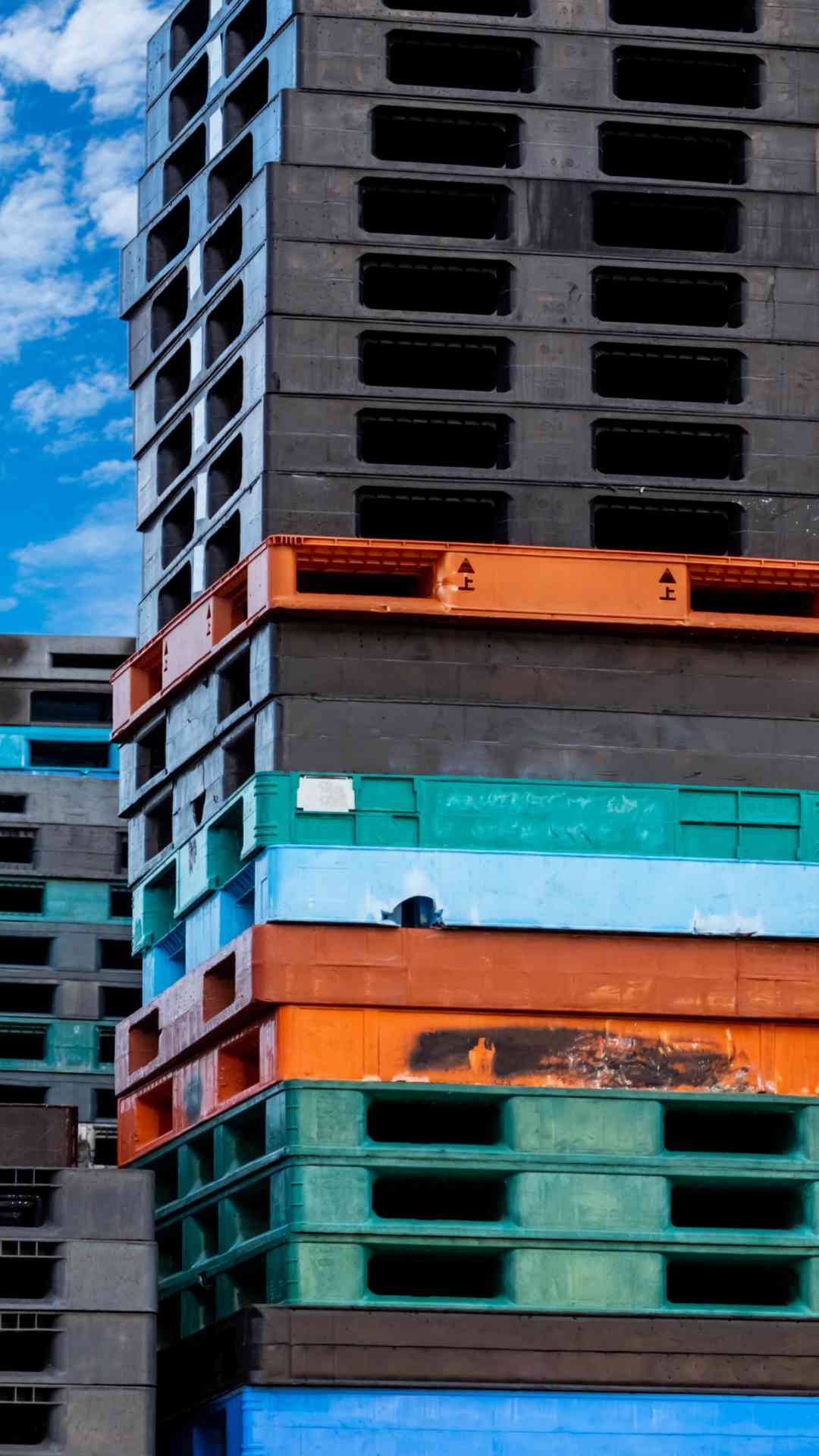
What are the benefits of plastic pallets?
- It produces less waste material throughout the world
- We have to cut less trees for a packaging material we often destroy after transportation, this includes one-way pallets
- Pallets won’t have to be dried out, no heat treatment is needed, it won’t mold like wooden pallets do, and they can also be used to make packing cases
- No waste material is produced, as chips or falling off pieces can be re-extruded after sizing
- For we work with standard dimensions, unlike wooden pallets, where driftwoods have different thicknesses, therefore robots can also be used in the production
- It is produced by nailing like a wooden pallet, making them easily repairable by the use of jigsaws. No need to be ground like an injection-molded pallet in case of a damage
- Surplus pallets can be re-milled and extruded to make new pallets – or other products such as plastic slates, fencing, boxes, tiles, plastic trapezoidal sheets, bricks, etc.
We can save our planet in many small steps!
Contact us using one of the contact details below
or send us a direct message!
- Füzesabony
- +36 70 518 36 68
- blueplanetef@gmail.com